REVIEW · FLAGSTAFF
Flagstaff & Sedona: LOWER Antelope Canyon Day Trip
Book on GetYourGuide →Operated by Arizona Tour & Travel · Bookable on GetYourGuide
Light changes every minute in Antelope Canyon. This Lower Antelope Canyon and Horseshoe Bend day trip links big-views and up-close slot-canyon walking into one long, satisfying day. I love the color shifts in the canyon walls, and I also love the classic Colorado River overlook at Horseshoe Bend. The main drawback to plan for: this is not a casual walk—there are steep stairs, narrow passageways, and even a 5-foot ladder.
The drive is part of the fun, too. I like that the tour includes complimentary hotel pickup and a small group (limited to 14), so you spend less time figuring things out and more time looking out the window. You also get a professional guide in English plus an English audio guide, which helps you follow both the scenery and the stories.
One more thing to know: you’ll start early and be out most of the day. From Sedona, it runs about 6–6:30 am to 5:30–6:00 pm, and from Flagstaff about 7–7:30 am to 4:30–5:00 pm—long enough that packing for comfort matters.
In This Review
- Key Things That Make This Day Trip Worth Your Time
- The Scenic Drive: Oak Creek Canyon, Red Rocks, and a Movie-Set Detour
- Painted Desert to the Navajo Nation (Dine’tah): More Than Just a Pretty Name
- Horseshoe Bend: The 1.5-Mile Walk to the Colorado River
- Glen Canyon Dam: A Necessary Scale Check
- Lower Antelope Canyon: Where the Light Changes and Your Body Pays Attention
- The Physical Reality Check: Fit Level, Height Limits, and Who Should Skip This
- Timing and the Rhythm of the Day: Early Start, Long Day, Small Group
- Price of $311: What You’re Actually Getting for the Money
- Who Should Book This Tour (and Who Should Choose a Different One)
- Should You Book This Lower Antelope Canyon & Horseshoe Bend Day Trip?
- FAQ
- FAQ
- How long is the trip from Sedona compared with Flagstaff?
- What days does this Lower Antelope Canyon day trip run?
- Is hotel pickup included?
- How much hiking is involved?
- Is Lower Antelope Canyon accessible if I have mobility issues?
- Are children, pets, or service dogs allowed?
- What’s included in the price, and is lunch provided?
Key Things That Make This Day Trip Worth Your Time
- Oak Creek Canyon road scenery plus a stop near the Slide Rock State Park area tied to Broken Arrow (Jimmy Stuart and Jeff Chandler)
- Painted Desert and Dine’tah context—learn how the Navajo Nation (Dine’tah) connects to these lands
- Horseshoe Bend photo walk: a 1.5-mile hike to the Colorado River overlook
- Glen Canyon Dam stop to break up the driving and add a big-scale moment before the canyon walk
- Lower Antelope Canyon mile walk with changing light effects, steep stairs, a 2-foot slot canyon section, and a 5-foot ladder
The Scenic Drive: Oak Creek Canyon, Red Rocks, and a Movie-Set Detour
A big reason to book this kind of day trip is that you don’t just “reach” the sights—you build excitement along the way. Leaving Sedona early puts you on the road when the light is gentler, and the tour routes you through Oak Creek Canyon, one of the prettiest drives in the US. Even though the ride through Oak Creek is only about a 12-mile stretch, it’s a quick hit of drama: towering red rock walls close in, and the whole area feels like it’s built for road-trip photos.
You’ll also pass Slide Rock State Park, and the tour points out that it has served as a movie set—specifically tied to Broken Arrow, starring Jimmy Stuart and Jeff Chandler. That small history-and-pop-culture touch matters because it keeps your brain engaged during the drive. You’re not just riding; you’re watching for specific landmarks.
After you crest the Colorado Plateau, the scenery changes again. The route goes through the second largest Ponderosa pine forest in the world (second only to the one in Russia, Siberia). That shift from red rock to tall pine trees gives you a breather before the desert portion of the journey. It’s a reminder that northern Arizona isn’t one look—it’s a stack of different worlds in a single day.
Other Lower Antelope Canyon we've reviewed at Antelope Canyon & Northern Arizona
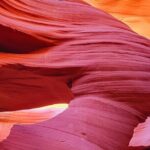
Painted Desert to the Navajo Nation (Dine’tah): More Than Just a Pretty Name
Once you head north on Hwy 89, the scenery turns color-forward. The tour includes the Painted Desert, named after an expedition led by Francisco Vázquez de Coronado in 1540 during his search for the seven cities of Cibola—cities believed to be made of pure gold. You’ll also see Vermillion Cliffs, which are described as part of the Navajo Nation region known as Dine’tah.
What I like about this segment is that it’s not treated like a blur between the “real stops.” The guide uses the drive to teach you about Navajo history, folklore, and ways of life, connecting what you see outside the window to a living culture and community. That matters because it helps you understand why these places feel so meaningful, not just visually striking.
In practical terms, this drive portion can also help you set expectations. By the time you reach Page, you’ve already moved from red rock canyon to pine forest to desert cliffs. When the day finally narrows into slot-canyon space later, it doesn’t feel random—it feels like the story is progressing.
Horseshoe Bend: The 1.5-Mile Walk to the Colorado River
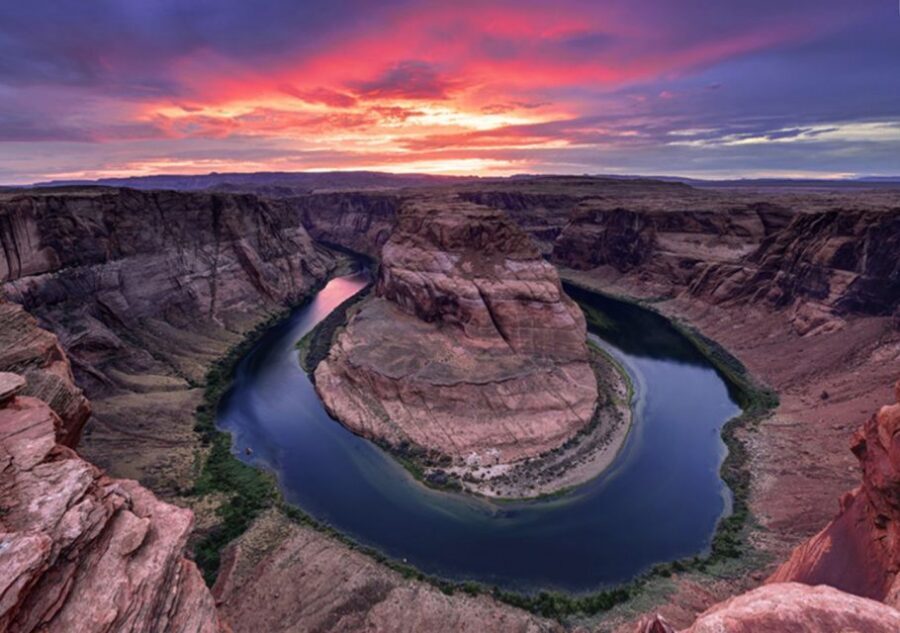
In Page, you’ll have the chance to do a 1.5-mile hike to the Horseshoe Bend overlook. This is one of the most photographed views in the world for a reason: from that high vantage point, you can see the Colorado River curving into a near-perfect bend, with the surrounding rock framing the water below.
This is the kind of stop where you’ll want to move at a steady pace and keep your footing. Even if the hike is only 1.5 miles, the viewpoint area and the path out there are about getting you in the right spot—not about adding a big training plan to your day.
One fun note: with a little luck, you might see river rafts down on the Colorado. That adds motion to the view, and it turns your photos from “static postcard” into “look, life is happening down there.”
Glen Canyon Dam: A Necessary Scale Check
Between the river overlook and the slot-canyon main event, you stop at Glen Canyon Dam. It’s a smart break in the flow of the day because it shifts your focus from one kind of wonder to another.
Slot canyons make you look down and inward. Horseshoe Bend makes you look out and down. A dam stop brings you back to a broader, engineered view of how people interact with big water and big terrain. You may not stay long here, but it helps the day feel complete instead of feeling like only a single theme.
Think of it like the palate cleanser between intense visual moments.
Lower Antelope Canyon: Where the Light Changes and Your Body Pays Attention
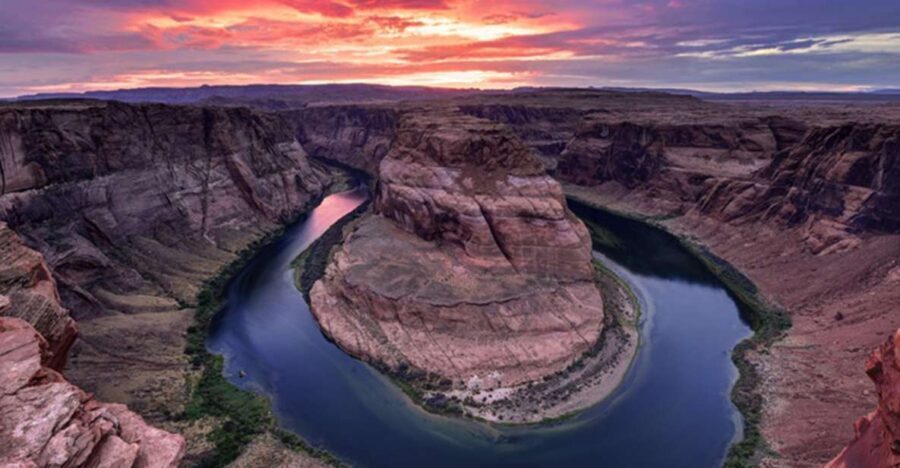
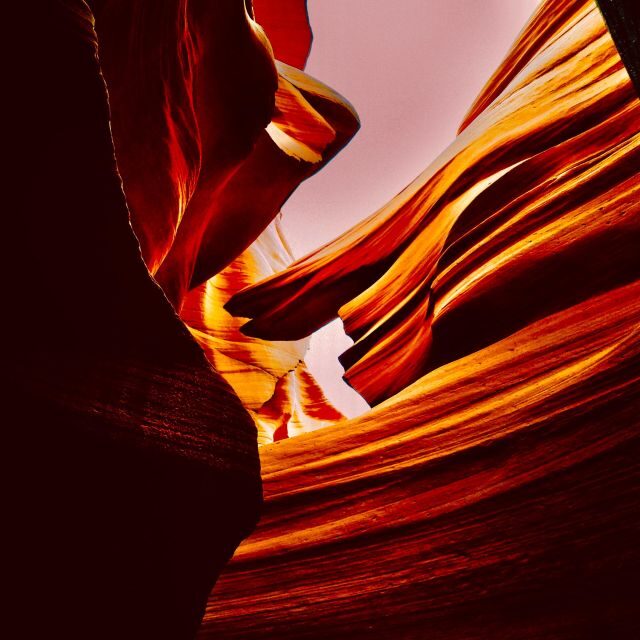
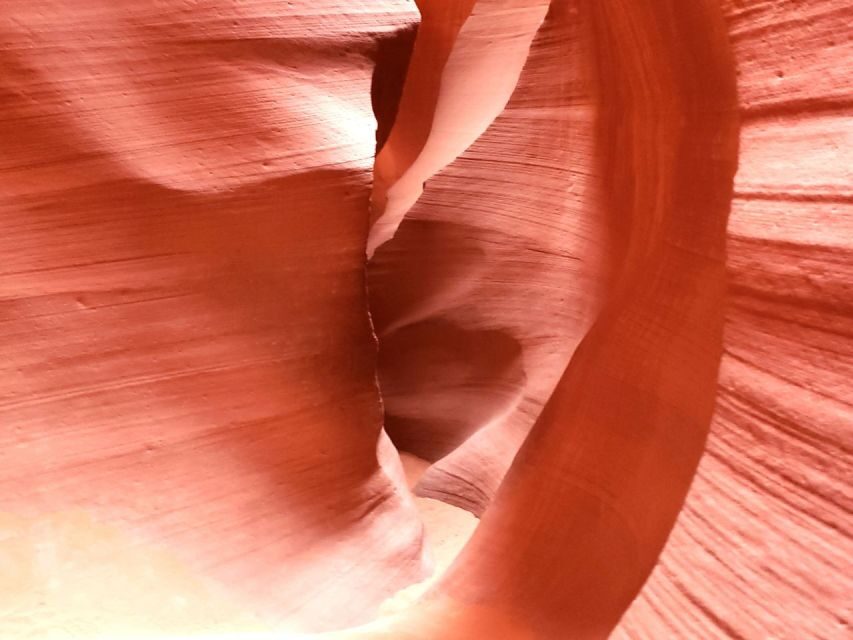
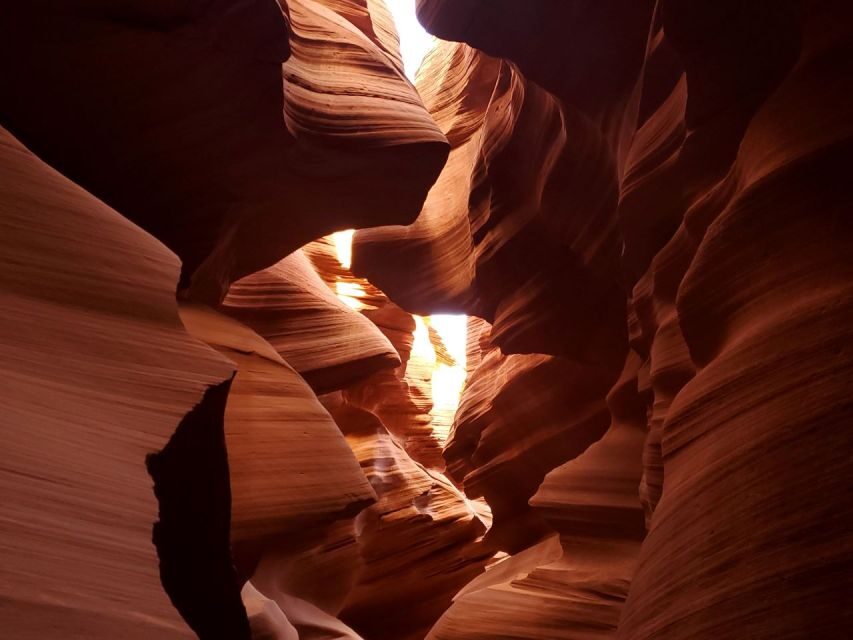
Lower Antelope Canyon is the heart of the day. You’ll take a mile hike through the canyon, and the experience is defined by light. As the sun moves across the sky, it filters into the canyon and shifts the color palette on the sandstone walls. The result is that you’re watching patterns form, fade, and reform as you walk.
This is why many people consider Lower Antelope Canyon a must-do: you’re not just seeing a place—you’re seeing how a place changes. Slot canyons create that effect naturally. The canyon walls act like a filter, and you feel like the color is alive.
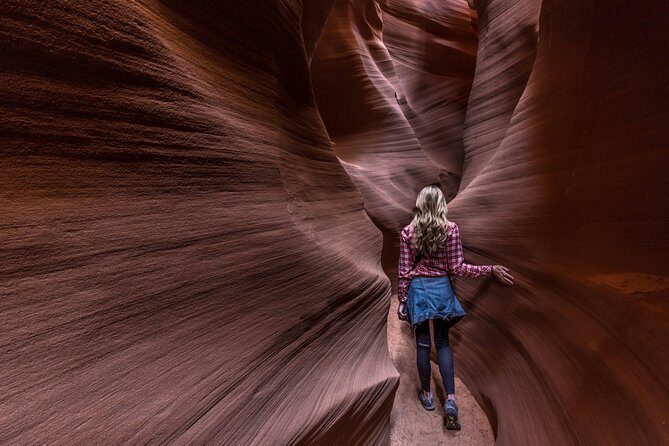
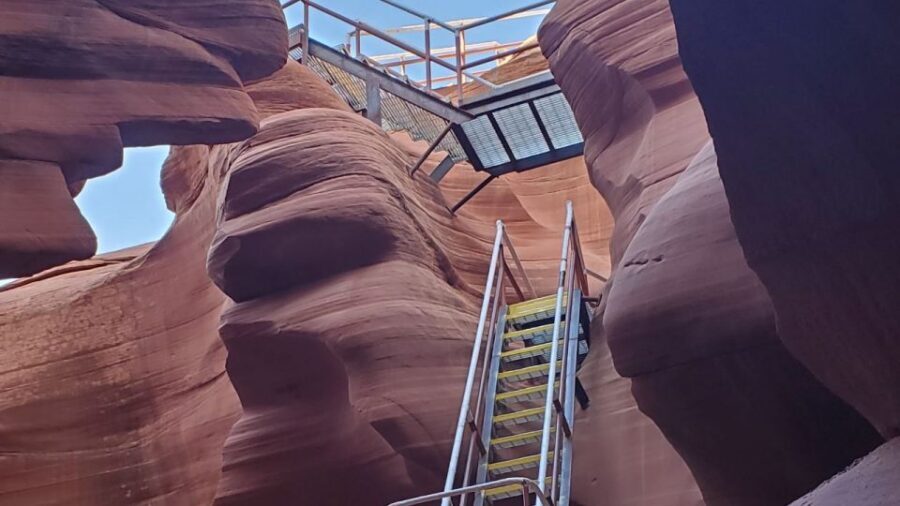
But let’s be honest about the “how.” This isn’t a stroller-friendly walk. The tour specifically notes that guests must be able to navigate:
- steep stairs
- narrow passageways
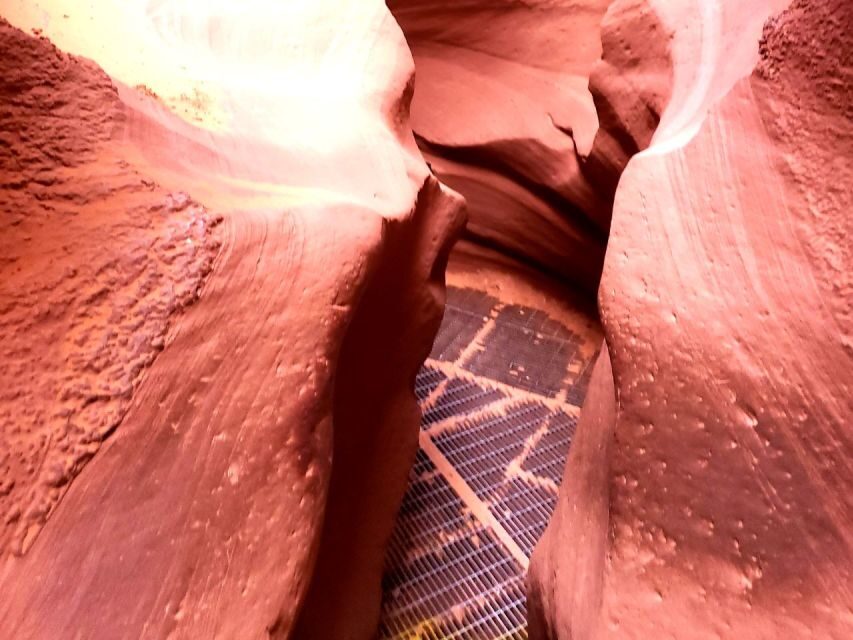
- a section where the slot canyon is about 2 feet
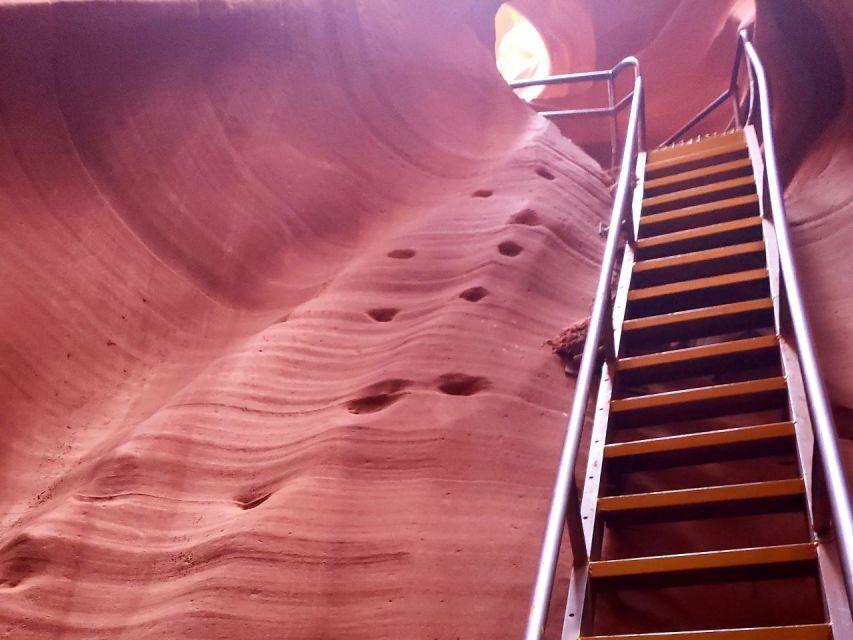
- and, at one point, a 5-foot ladder
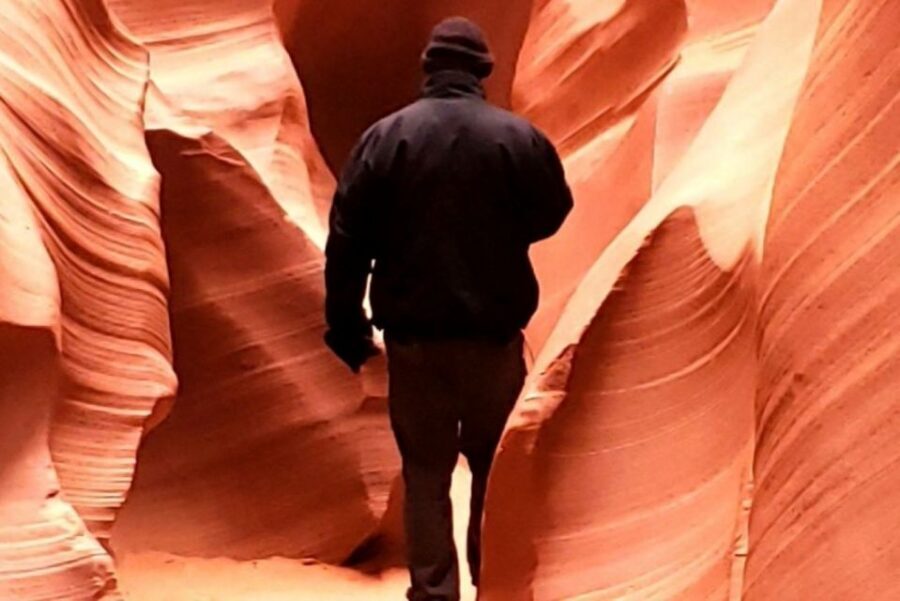
You also need to be able to walk for about 90 minutes on uneven, unpaved ground and handle stairs. If narrow spaces make you uneasy, this is where you’ll want to think hard before booking.
A small practical tip: wear hiking shoes and dress for the weather you expect. Canyon walls can be cool, and stairs plus foot placement means comfort and grip matter more than trying to look cute.
Other Half-Day & Full-Day Tours we've reviewed at Antelope Canyon & Northern Arizona
The Physical Reality Check: Fit Level, Height Limits, and Who Should Skip This
This tour includes multiple walking segments, but the canyon part is the deciding factor. The Lower Antelope Canyon portion demands balance and comfort with tight spaces. The tour also spells out limits and exclusions that you should treat as non-negotiable:
- No children under 6 years old
- No pets, and service dogs are not permitted on this tour
- Not suitable for pregnant women
- Not suitable for people with mobility impairments or wheelchair users
- Not suitable for people with low level of fitness
There are also size considerations. You’re asked to advise if anyone in your party is taller than 6 feet (183 cm) or more than 250 pounds (113 kg). That’s directly tied to the narrow passageways and the ladder section, so it’s not just paperwork—it helps the operator plan for safety and comfort.
So who is this best for? People who like hiking, don’t mind stairs, and can handle cramped spaces for a significant portion of the canyon walk. People who want big views, but also want the “walk inside the photo” effect.
Timing and the Rhythm of the Day: Early Start, Long Day, Small Group
This trip is long because it’s combining several key regions and viewpoints. Duration is listed as 630 minutes. Practically, that breaks down as:
- From Sedona: about 6–6:30 am departure and about 5:30–6:00 pm return (about 11.5 hours)
- From Flagstaff: about 7–7:30 am departure and about 4:30–5:00 pm return (about 9.5 hours)
It’s also offered on Tuesday, Wednesday, and Thursday. If you’re trying to fit this into a tight itinerary, those days matter.
Lunch is on your own. The tour does allot time for it, but you should still plan to handle a meal without relying on a set menu included in the price.
The small group format (up to 14 participants) is a real quality-of-life upgrade. It tends to make transfers easier and helps the guide keep everyone moving through stair and passage sections at a safe pace.
And yes, bottled water is included, which is one less thing to think about before you step outside.
Price of $311: What You’re Actually Getting for the Money
At $311 per person, this isn’t the cheapest way to do the area. But the price makes sense when you look at what’s included and what you’re avoiding.
Your payment covers:
- complimentary hotel pickup (Sedona/Village of Oak Creek and Flagstaff city limits)
- bottled water
- a professional English-speaking guide
- an English audio guide
- all fees
You’re also paying for the structure: someone else handles the driving, timing, and the sequence that gets you to Horseshoe Bend and then into Lower Antelope Canyon. Canyon access and guided walking are not something you want to improvise on your own if your day is packed.
Is it worth it? For me, it’s a yes if you want a guided, organized route that hits the biggest hits—Horseshoe Bend plus Lower Antelope Canyon—and you’re physically able to do the canyon portion comfortably. It’s probably not worth it if you’re mainly interested in a quick scenic stop with no stairs, no ladders, and no narrow passages.
One more scheduling reality: the activity is non-refundable, so choose your day carefully. If weather or personal plans might change, build in a buffer.
Who Should Book This Tour (and Who Should Choose a Different One)
Book this if you want:
- a full-day combo of two iconic sights: Horseshoe Bend and Lower Antelope Canyon
- a guided explanation of what you’re seeing, including Navajo Nation (Dine’tah) context
- small-group pacing (limited to 14)
- a day built around photography-friendly viewpoints, plus the light-changing canyon interior
Skip it if you:
- need wheelchair access or have mobility limitations
- want a low-effort, minimal-stairs outing
- are traveling with a child under 6
- are relying on service animals (not permitted on this tour, per the rules provided)
- are uncomfortable in tight spaces or steep stair sections
And if you’re a taller-than-6-feet person or above the listed weight threshold, you should flag it early so the operator can plan appropriately. Those dimensions matter in a 2-foot slot canyon section and with the ladder.
Should You Book This Lower Antelope Canyon & Horseshoe Bend Day Trip?
If your top goal is to experience Lower Antelope Canyon the right way—guided, timed for the light, and followed through to the Horseshoe Bend overlook—this is a strong booking. The value is in the setup: pickup, guide, audio support, and the full route from Sedona or Flagstaff to Page without you playing logistics roulette.
But if you’re not comfortable with stairs, ladders, and very narrow canyon passageways, choose a different format. Lower Antelope Canyon here is not a gentle walk, and the tour is upfront about that for good reason.
FAQ
FAQ
How long is the trip from Sedona compared with Flagstaff?
From Sedona, the tour runs about 11.5 hours (approximately 6–6:30 am departure and 5:30–6:00 pm return). From Flagstaff, it runs about 9.5 hours (approximately 7–7:30 am departure and 4:30–5:00 pm return).
What days does this Lower Antelope Canyon day trip run?
It departs Tuesday, Wednesday, and Thursday.
Is hotel pickup included?
Yes. Complimentary pickup is included from all hotels in Sedona/Village of Oak Creek and from Flagstaff city limits.
How much hiking is involved?
You’ll hike 1.5 miles to the Horseshoe Bend overlook. You’ll also do a mile hike through Lower Antelope Canyon, and you must be able to walk for about 90 minutes on uneven, unpaved ground.
Is Lower Antelope Canyon accessible if I have mobility issues?
This tour is not suitable for people with mobility impairments or wheelchair users, and it includes steep stairs, narrow passageways, and a 5-foot ladder.
Are children, pets, or service dogs allowed?
No children under 6 years old are permitted. Pets are not permitted, and service dogs are not permitted on this tour.
What’s included in the price, and is lunch provided?
The price includes bottled water, a professional English tour guide, an English audio guide, and all fees. Lunch is not included, but time is allotted for lunch on your own.