REVIEW · PAGE
Upper & Lower Antelope Canyon Tours – Arizona Tours
Book on Viator →Operated by Dineh Tours · Bookable on Viator
Antelope Canyon hits fast. This Upper and Lower combo tour is interesting because the canyon access is on Navajo land, where you go with a guide, not on your own. I also like how the day runs with hotel/Airbnb pickup inside Page city limits, so you’re not figuring out parking, timing, or dusty backroads before your first steps.
Here’s the trade-off: you’ll move through both canyons on a guided route, and the Lower Canyon hike is moderate with a long stair-and-ladder descent. If you’re hoping for lots of standing around and lingering at every photo spot, plan on a more managed pace and follow their gear rules.
In This Review
- Key things to know before you go
- Lower Antelope’s stairs, ladders, and Diné guidance
- What to expect under your feet
- Upper Antelope’s 1-mile route and the 150-step reality
- The Navajo Mountain viewpoint and Grand Staircase stop
- Pickup in Page: how the schedule really feels
- Small-group feel
- Photo rules, timing, and the dust factor
- Bring something for dust
- Midday picnic break near Big Lake Trading Post
- Price and value: what $510.52 buys you
- When the price might feel wrong
- Who should book this Upper and Lower Canyon combo
- Should you book this Upper and Lower Antelope Canyon tour?
- FAQ
- How long is the Upper and Lower Antelope Canyon tour?
- What hike distance and difficulty should I expect at Lower Antelope Canyon?
- How much walking is at Upper Antelope Canyon?
- Is hotel or Airbnb pickup included?
- Where do I meet if my lodging isn’t included for pickup?
- What’s included with the ticket?
- Are there restrictions on bags and camera gear?
- Is there a restroom during the tour?
- What happens if weather is bad?
Key things to know before you go
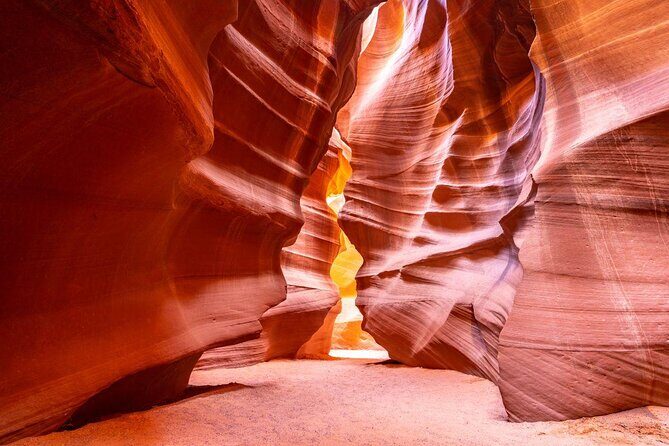
- Navajo-land access with guided entry: You get into places you can’t self-tour, with guides who share Diné/Dineh context.
- Lower Canyon is the workout: Expect 74 steps down, then ladders and small stairs as you work toward the exit.
- Upper Canyon is easier, still stepped: About a 1-mile roundtrip plus a staircase descent back to the vehicle drop-off.
- A real break mid-day: You stop at a picnic area near Big Lake Trading Post for restroom access and food you can buy.
- Photography help is part of the job: Guides set up camera settings and point out where the light hits best.
Lower Antelope’s stairs, ladders, and Diné guidance
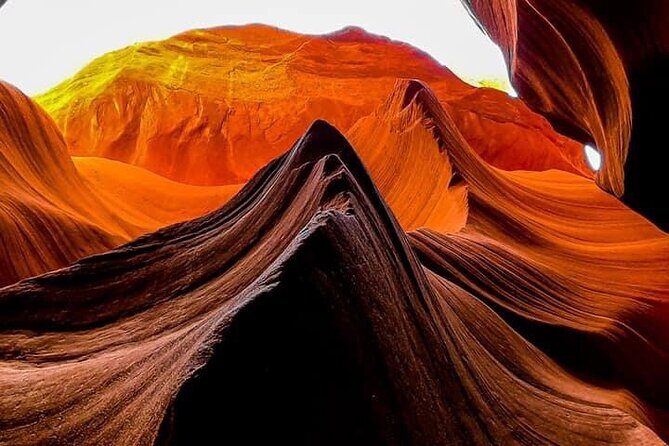
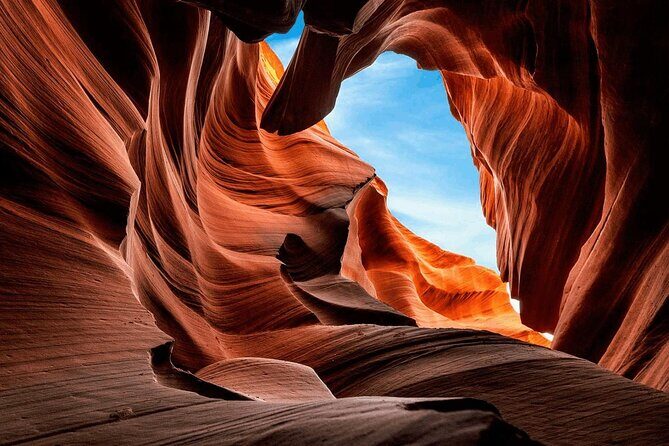
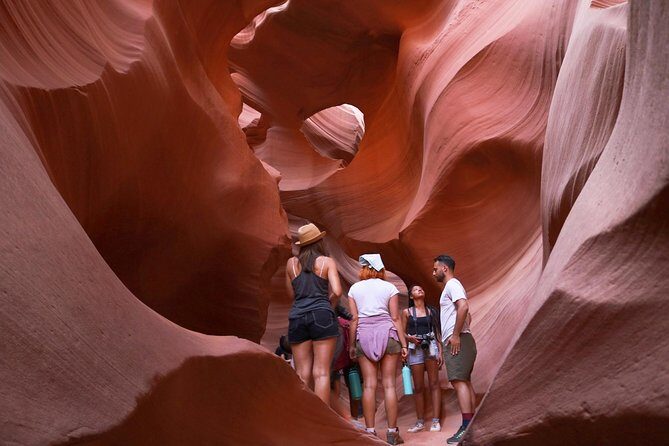
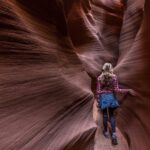
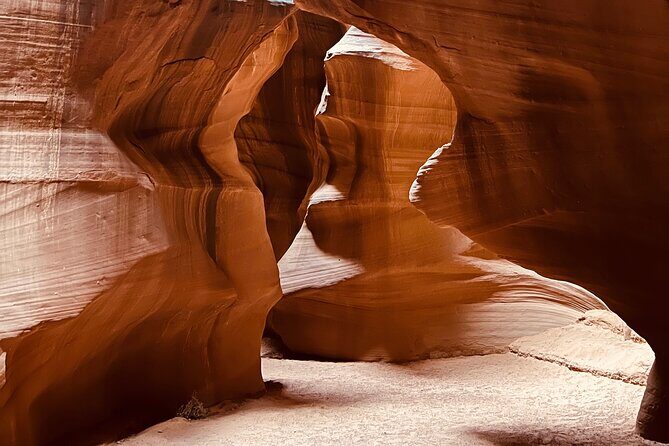
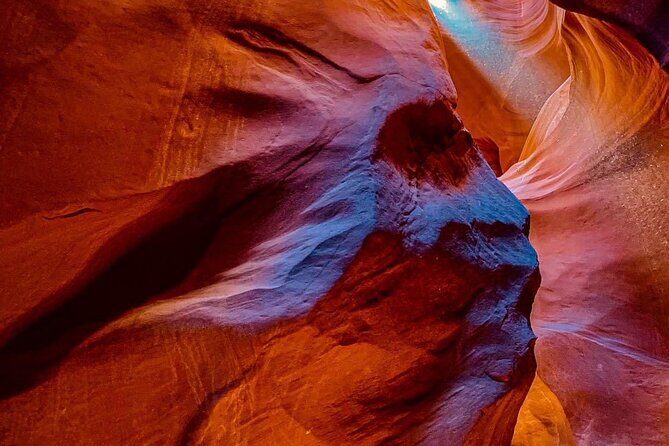
Lower Antelope Canyon is the star for most people, and it starts the moment you step into the canyon’s rhythm. The route is about 1.1 miles from start to finish, and the first big moment is descending 74 steps to get down into the slot. If you’ve ever underestimated stairs in desert heat, this is where you feel it.
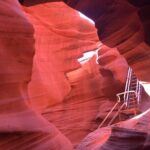
Once you’re inside, the guide-led path continues with a gradual incline toward the exit. You’ll also deal with ladders and small stairs in the chambers, and the exact visuals are easy to recognize once someone shows you the general setup—think ladders plus short stairs as you move from one section to the next. Guides also share practical guidance for pictures, including where to aim your camera for the strongest light. One of the repeat themes from the guide experience is that they help visitors get usable settings quickly, not just show the canyon and wave goodbye.
Lower Canyon is also where the cultural piece is most grounded. The tour includes context about the Diné (Dineh), woven into what you’re seeing rather than treated like a separate lecture. If you care about more than the Instagram shapes—and you want to know why these places matter—this is the “why” part of the visit.
Other Lower Antelope Canyon we've reviewed at Antelope Canyon & Northern Arizona

What to expect under your feet
This is not a flat stroll. Even though the group route is guided and controlled, you should arrive with moderate fitness and expect steps. Footing can feel uneven and the route can feel busy, because canyon entry is timed and you’re moving with the flow of other groups. The guide helps keep it safe and moving, but you still feel the structure of the day.
Upper Antelope’s 1-mile route and the 150-step reality
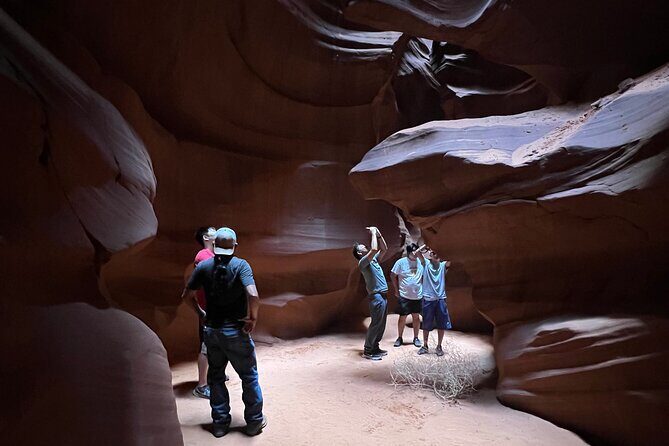
Upper Antelope Canyon is the easier cousin, but it’s not free of effort. You get dropped off about 4 miles from the main highway, then it’s roughly 1 mile roundtrip (about 3/4 mile is also stated as the hike total) from the entrance area. You’ll also face an incline around the upper area and then a descent of about 150 steps back down toward the vehicle drop-off point.
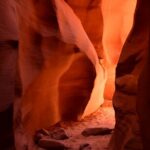
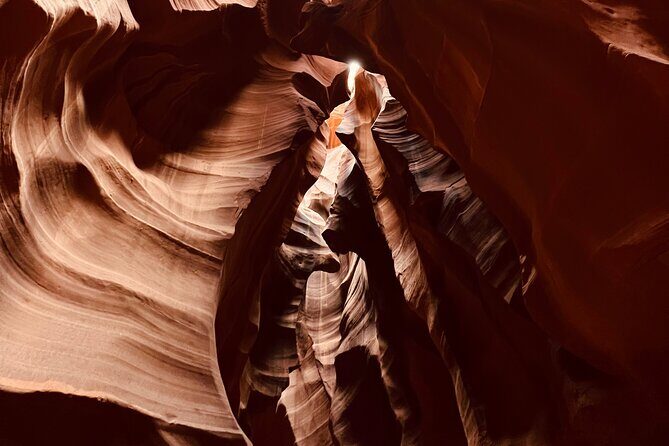
Upper is a good contrast after Lower. Lower often feels more compressed and dramatic as you go through the chambers, while Upper tends to feel lighter and more open in the way the light enters. You’ll likely leave with a clearer sense of why doing both can be worth it: they’re different structures, not just the same canyon in a new outfit.
Most people do Upper for one reason: variety. After you’ve spent time walking ladders and steps in Lower, Upper feels like a change of pace while still delivering that unmistakable slot-canyon look. And since the tour includes a guided walkthrough for about an hour at Upper, you’re not just hiking alone and guessing your way through.
The Navajo Mountain viewpoint and Grand Staircase stop
Between canyon time, the itinerary includes two quick stops that add context to the region.
One stop is at Navajo Mountain, standing at 10,348 feet. It’s described as the tallest mountain located on the Navajo Nation. Even if you don’t stay long, it helps you understand the scale of what surrounds Page. Slot canyons can make you forget you’re in a much bigger landscape, and that kind of “where are we” framing is useful.
Another stop is Grand Staircase–Escalante, a huge stretch of federal land in southern Utah (described here as 2.3 million acres). You may not get a long walk or a big hike here, but you do get the sense that the canyons aren’t random. They fit into a much larger story of rock layers and erosion.
Pickup in Page: how the schedule really feels

This is a pickup-and-go style tour, and that matters. Pickup starts about 15–20 minutes before your scheduled time. You’ll be picked up from select hotels/Airbnbs and two campgrounds within Page city limits. They specifically note they do not pick up from Page Lake Powell Resort, so if you’re staying there, you’ll need to plan your meeting point.
If your lodging isn’t in the pickup list (or you don’t have a pickup location set), you meet at the Walmart Super Center in Page. That detail is small, but it saves stress on a day when you’re trying to get down into canyons before the light window changes.
Also, they share Mountain Standard Time / Arizona Standard Time. One more thing that can mess with your phone: you experience a one-hour time change as you drive through parts of the Navajo Nation (noted relative to Flagstaff and Grand Canyon, and also when coming from Las Vegas/parts of Utah). The tour suggests setting your device manually to Phoenix global time to avoid confusion.


Small-group feel
The stated maximum is 14 travelers, which is a real limit if you care about personal space. Still, slot canyons are slot canyons: you’ll see other groups at timed entry points. A couple of lower-rated experiences mention feeling mixed with larger waves at entry, so if you want the kind of quiet, slow-moving experience where you can stop and breathe without pressure, it’s worth knowing that “small group” doesn’t always mean “empty canyon.”
Photo rules, timing, and the dust factor

Antelope Canyon photos can look effortless online. In real life, it helps when the guide is on your side.
A strong pattern in positive feedback is guides who:
- help set camera settings for better color and clarity
- point out where the lighting is most flattering
- make sure you can get pictures of the group, not just of the walls
You’ll also want to plan around the equipment rules. These are the key restrictions:
- No bags or backpacks at Lower Antelope Canyon (they include purses, hydration bags, and fanny packs)
- No tripods, monopods, stabilizers, or selfie sticks
- No GoPros or camcorders
So pack light. If you’re the type who brings a “just in case” bag for batteries and snacks, that won’t fly for Lower Canyon entry. Bring only what you can safely keep away while you’re in the canyon.
Bring something for dust
Page can be dusty, and one tip from a guide-experience is to bring a mask or facial covering for the ride. That’s not about comfort only. It’s about you being able to focus on the canyon instead of fighting dust every time you turn your head.
Midday picnic break near Big Lake Trading Post
Between Lower and Upper, there’s a pause at a picnic area. This stop is handy for two reasons:
- Restroom access is available there
- you can buy additional food and drinks if you want more than the included snacks
The tour also includes bottled water and snacks, and the vehicle is air-conditioned, which matters because the canyon part is physical and the drive can feel hot. This break gives you a chance to reset before the next stepped section of the day.
Price and value: what $510.52 buys you
At $510.52 per person for roughly 5 hours 30 minutes, this tour sits in the higher end for Antelope Canyon options. Price alone doesn’t decide if it’s worth it, though. The value is mostly in three places:
1) Guided access that’s hard to replicate alone
Lower and Upper Antelope Canyon access rules mean you’re relying on a guide for entry. For many people, that’s the whole value proposition: you’re paying to show up and get taken care of at the canyon doors.
2) Transport solved from Page
The pickup inside Page city limits plus drop-off at your lodging is a real convenience. If you’re in town for a short visit, reducing logistics is often worth real money.
3) Time spent not stressing, plus photo guidance
The guide-led photography help comes up again and again in strong ratings. When someone helps set your iPhone or camera settings quickly, that can turn a frustrating canyon session into a successful photo story.
When the price might feel wrong
A few lower-score experiences raise concerns that this combo can feel rushed or that it can mix into canyon entry patterns you didn’t expect for a premium. One person also felt the operation handled less of the canyon guiding directly and more like handoff and driving between sites. Those are the kinds of issues that can make you question the cost if you’re expecting a more personal, slow pace at every stop.
My advice: if you’re paying premium rates, go in with the right expectation. This is a guided route with timed canyon movement, not a private hiking session where you control the tempo.
Who should book this Upper and Lower Canyon combo
This tour fits best if you:
- want to do both canyons in one day
- care about Navajo/Diné context while you’re walking
- prefer a pickup-and-drop plan over self-driving stress
- want hands-on photo tips, including help with camera settings
Consider another approach if you:
- are ultra-sensitive to crowds or want a very slow pace
- hate following strict gear rules (especially the no-bags policy at Lower)
- think a premium price should guarantee total emptiness and zero pressure
Also note the physical side. Lower is labeled moderate, with a longer stepped descent and ladder segments. Upper is described as easier hiking overall, but you still face a substantial stair descent (about 150 steps).
Should you book this Upper and Lower Antelope Canyon tour?
I’d book it if your priority is a stress-free way to see both Upper and Lower Antelope Canyon with a guide, especially if you want help getting good photos and you appreciate learning Diné context as you walk through the slots.
I’d pause and shop carefully if you’re the type who wants maximum unhurried time in the canyon or you’re expecting a truly private feel at entry points. In that case, the biggest question isn’t the canyon beauty—it’s whether you’re comfortable with the structured pace and the gear restrictions.
If you do book, show up with a light daypack mindset, bring a dust cover, and set your phone time to Phoenix style to avoid the Arizona/Navajo time-change headache. Then focus on the moment when the canyon light hits—because that’s why you’re here.
FAQ
How long is the Upper and Lower Antelope Canyon tour?
It runs about 5 hours 30 minutes (approx.).
What hike distance and difficulty should I expect at Lower Antelope Canyon?
Lower Antelope Canyon involves about 1.1 miles from start to finish and is described as moderate. You’ll descend 74 steps and navigate areas with ladders and small stairs.
How much walking is at Upper Antelope Canyon?
Upper Antelope Canyon is described as an easy hike, with about 1-mile roundtrip from the entrance drop-off. You’ll also handle an incline and descend about 150 steps back to the vehicle drop-off.
Is hotel or Airbnb pickup included?
Yes. Pickup is offered from select hotels/Airbnbs and two campgrounds within Page city limits, scheduled 15–20 minutes before the tour. They do not pick up from Page Lake Powell Resort.
Where do I meet if my lodging isn’t included for pickup?
If you don’t have a pickup location set or you’re not picked up, you meet at the Walmart Super Center in Page, Arizona.
What’s included with the ticket?
The tour includes admission tickets for both canyon stops, plus bottled water, snacks, and an air-conditioned vehicle.
Are there restrictions on bags and camera gear?
Yes. At Lower Antelope Canyon, there are no bags or backpacks, including purses, hydration bags, and fanny packs. Also, no tripods/monopods/stabilizers/selfie sticks, and no GoPros or camcorders.
Is there a restroom during the tour?
There is no restroom on board, but you do stop at a picnic area near Big Lake Trading Post where restrooms are available.
What happens if weather is bad?
The experience requires good weather. If it’s canceled due to poor weather, you’ll be offered a different date or a full refund.