REVIEW · PAGE
Lower Antelope Canyon Admission Ticket
Book on Viator →Operated by National Park Express · Bookable on Viator
Sandstone light turns a walk into art. Lower Antelope Canyon delivers those curvy sandstone waves and whorls with a Navajo-guided route that also adds cultural and geology context, plus hands-on help for great phone and camera angles. The main thing to weigh: the canyon has steep, tight stairs/ladders and uneven footing, so you’ll want a moderate fitness level (and a calm head).
I especially like how much the guides focus on making the canyon look good in real life, not just on postcards. In the group, I’ve seen guides like Lamor, Joanne, Carson, and Myron work the light and angles, even taking extra photos for people using phones. The second big win is the human side: you’re not just walking through rock; you’re hearing why this place matters to the Navajo Nation.
One more practical heads-up: Lower is narrower than Upper, and that can feel claustrophobic to some people. If you’re worried about heights, snug spaces, or back/knee issues, plan with honesty—you’ll enjoy it more if you know how the stairs and step-to-step walking will feel for you.
In This Review
- Key things to know before you go
- Lower Antelope Canyon: what you’re actually walking into
- Your Navajo guide: the difference between seeing it and understanding it
- Timing and the route: 1 hour 30 minutes feels like more
- What to expect at the canyon stops (and why the light changes everything)
- Rules that shape the experience: what you can bring inside
- Quick clothing cheat sheet
- Group size and pacing: why max 15 people is a big deal
- Price and value: what $78 gets you (and what’s extra)
- Who should book this tour—and who should think twice
- Should you book Lower Antelope Canyon from Page?
- FAQ
- Do I need hotel pickup for Lower Antelope Canyon Admission Ticket?
- What’s the meeting point for this tour?
- How strenuous is the Lower Antelope Canyon walk?
- Are there restrooms at the canyon?
- Can I bring bags, tripods, or other camera gear into the canyon?
- Is a Navajo Nation permit fee included in the ticket price?
Key things to know before you go
- Small groups (max 15 people) keep the pace calmer and give the guide time to stage photos and answer questions.
- Photo help is part of the tour, including tips on phone settings and where to stand for the best light.
- Expect stairs and uneven sand: the route is short on paper, but it’s real walking with elevation changes.
- No bags or tripods inside the canyon, so pack light and leave camera gear in your vehicle.
- Plan for no restrooms at the canyon; use facilities at the check-in area before you enter.
- Arrive early: start times are departure times, and late arrivals can lose their spot.
Lower Antelope Canyon: what you’re actually walking into
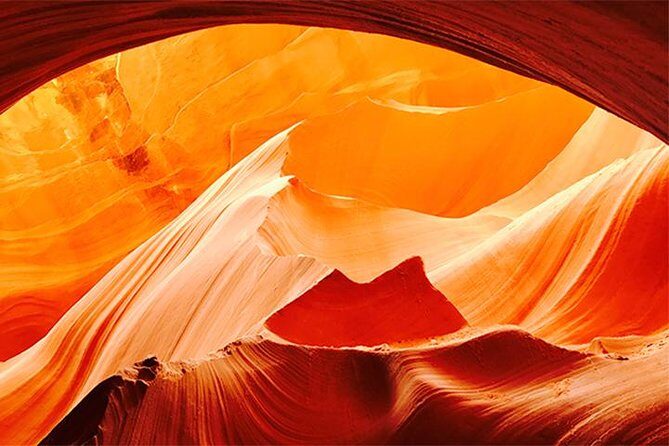
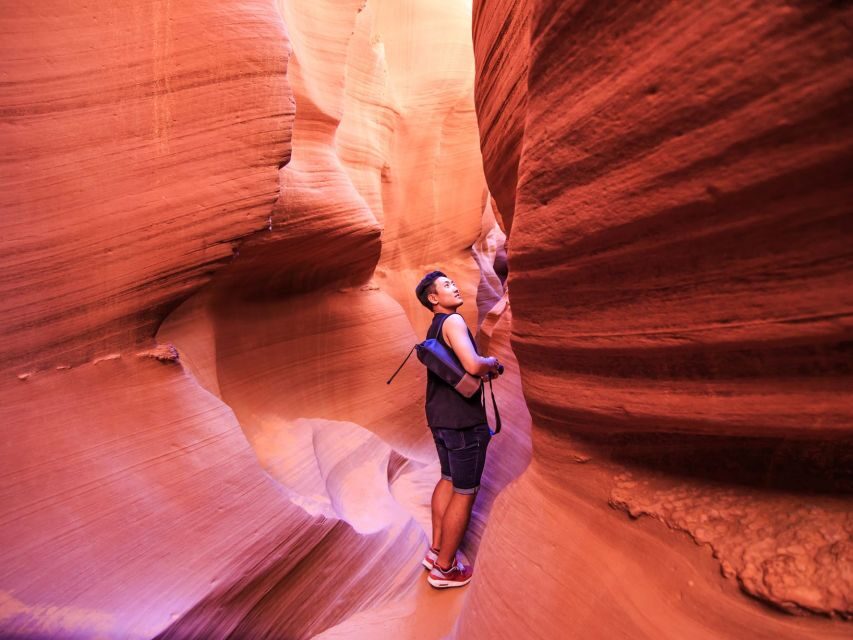
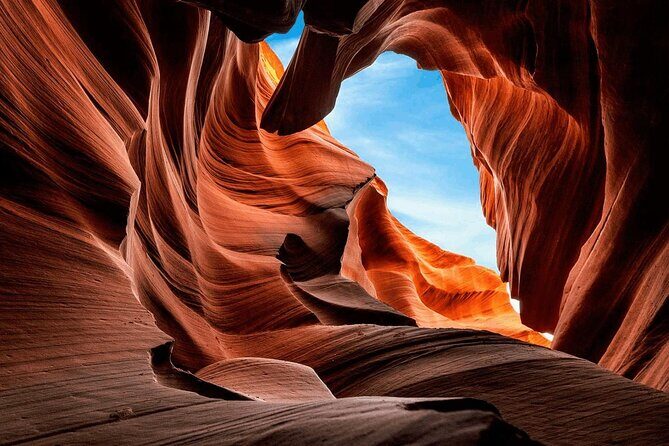
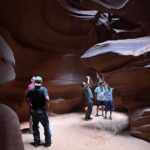
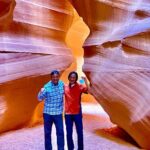
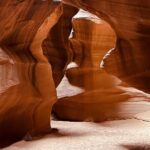
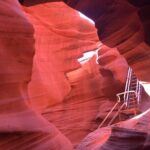
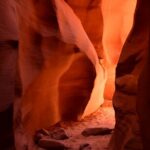
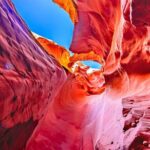
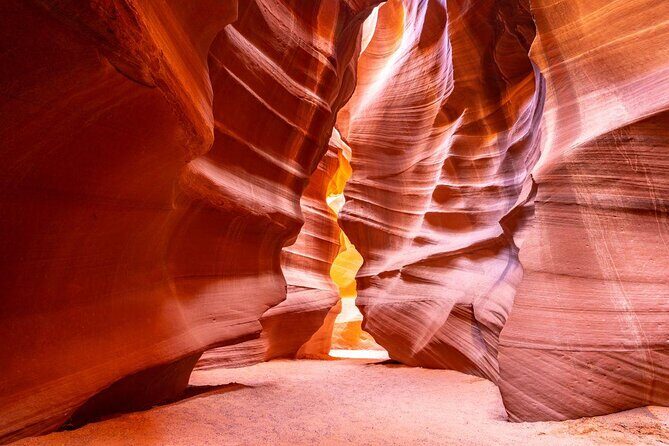
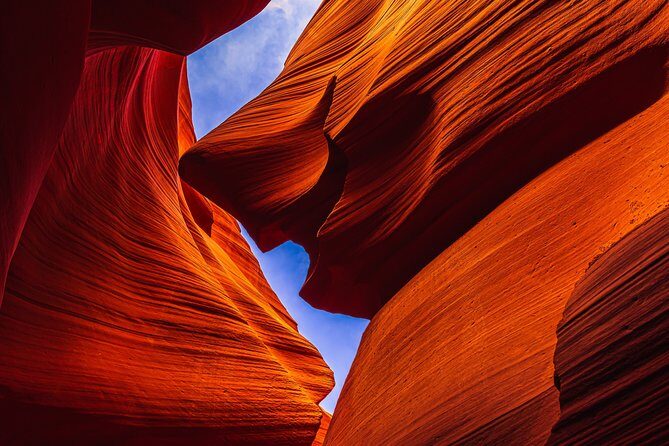
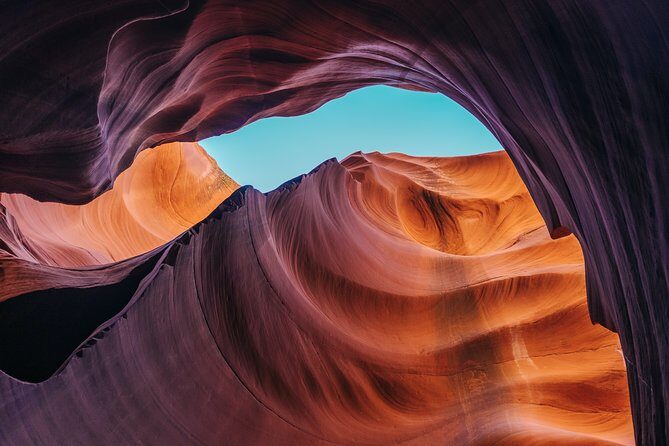
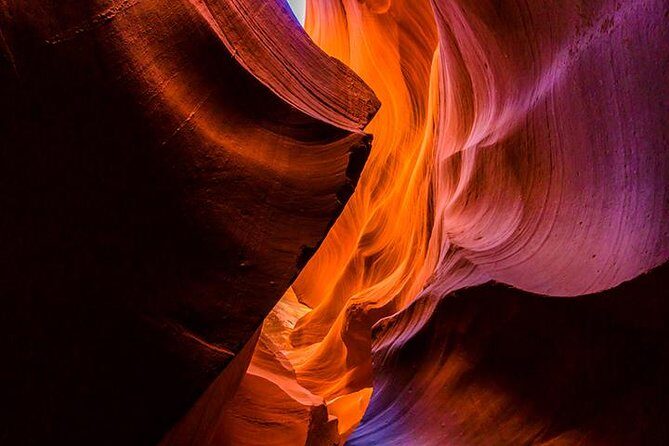
Lower Antelope Canyon is nicknamed Corkscrew Canyon, and that nickname is your clue about the experience. The path includes steep, narrow stairs used for access, and the canyon walls squeeze closer as you move deeper. Visually, it’s mostly V-shaped, with sections that feel more A-shaped or parallel, which changes the way the light hits the rock.
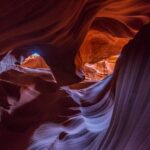
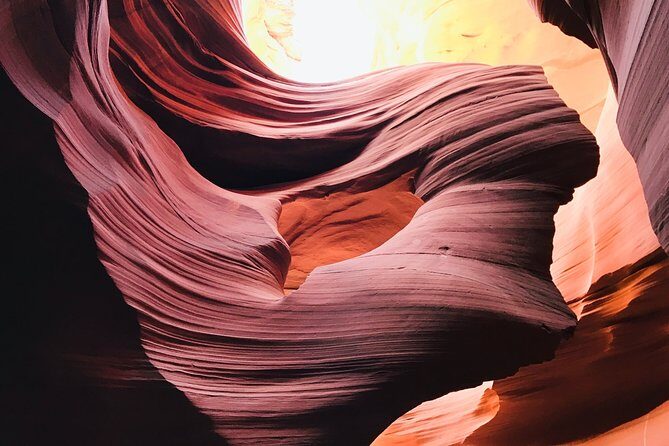
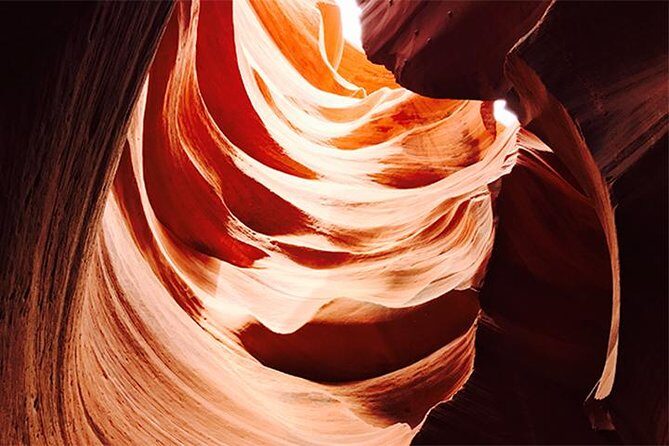
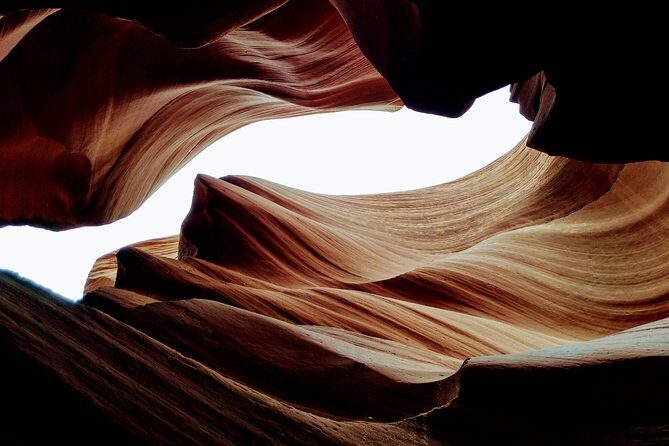
What makes this canyon special for you is the way the sandstone “wave” patterns show up in different lighting conditions. You’re not stuck with one flat view. As you turn corners and climb down and up steps, the canyon geometry shifts the highlights and shadows across those carved forms.
Also, this is one reason people book Lower specifically: it’s more dramatic in its stair-and-slot feeling than a simple boardwalk stroll. It’s the kind of place where the views look like they were sculpted, because the water and rock did the sculpting over long time spans—and the route is set up so you see those changes up close.
Other Lower Antelope Canyon we've reviewed at Antelope Canyon & Northern Arizona

Your Navajo guide: the difference between seeing it and understanding it
This tour is led by Navajo guides, and that matters. You’re not just getting a timed walk; you’re getting interpretation—local history and geology—woven into the stop points.
What I like most is how guides translate the canyon into something you can notice. Many guides time their pointers to what the light is doing right then, so you learn where to stand for the strongest glow and how to frame the shapes. Some guides are particularly helpful with practical phone photo tips. You’ll often hear guidance like where to hold your phone and how to adjust settings so the canyon colors and textures don’t wash out.
You may even meet guides known for making photos easy for the whole group. Examples from real guide names you might encounter include Lamor, Joanne, Carson, and Vanessa, with people praising them for being friendly, patient, and for taking extra photos for each person at favorite spots. That personal photo attention isn’t just a nice bonus—it can save you time and frustration when you’re trying to shoot a moving, stair-based route.
Timing and the route: 1 hour 30 minutes feels like more
The tour is about 1 hour 30 minutes total, and the amount of canyon you cover is roughly 1,335 feet inside. On paper, that sounds short. In practice, the route includes uneven surfaces, elevation changes, and stair climbing, so it can feel longer—especially the first few minutes when you’re adjusting to sand, dust, and step spacing.
The route is also set up in phases. You’ll arrive at the check-in site, park, and then handle the final check-in process with the Navajo guide team at the tour building. After that, you’ll wait until your group’s turn to enter is called.
Inside, expect a steady “move to the next viewpoint” rhythm rather than a long linger at every single spot. Still, the pacing is generally set by the guide, and many people appreciate getting enough time to soak in the view while still keeping the tour flowing.
One practical note: there are no restrooms at the canyon, so go before you enter. Also, the canyon walk requires you to be able to walk unassisted on uneven surfaces and through elevation changes, including steep inclines/declines. If you need frequent breaks, it’s worth planning for that ahead of time.
What to expect at the canyon stops (and why the light changes everything)
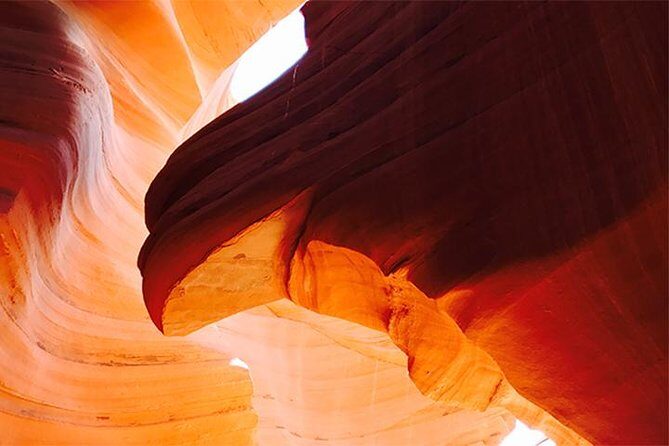
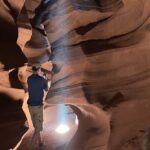
Lower Antelope Canyon is made of repeating moments: a narrow corridor, a sudden widening, a turn where the rock texture catches the sun, then a step down or up that changes your viewing angle again.
Those turns are where the photos get good fast. Guides typically steer you to specific spots so you can line up the rock “frames” and see the depth. In a place like this, your best photos usually come from standing in the right place at the right moment—not from having the most gear.
You’ll also see why timing matters. Lower canyon lighting can shift through the day and across seasons, and guides know where to stand to make the sandstone look its best. That’s where the guide skill becomes practical. Instead of guessing, you follow a guide who already knows how the light falls on the whorls and whiplash curves.
In case you’re wondering: yes, the canyon is scenic the whole way through. People tend to come away thinking they got more than one “wow” view—because the canyon doesn’t stay the same as you move deeper.
Rules that shape the experience: what you can bring inside
Lower Antelope Canyon keeps things strict for safety and preservation, and those rules affect what your visit feels like.
Here’s what you should plan on leaving in your vehicle:
- No bags or backpacks of any kind inside the canyon
- No camera equipment such as tripods, monopods, selfie-sticks, or camera bags inside the canyon
- No drones, GoPros, or camcorders inside
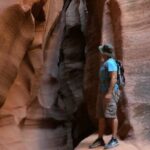
What about personal items you’ll miss if you forget? Sunscreen, sunglasses, and a hat/bandana are worth bringing because you’ll be walking on outdoor sand and dust before and after the canyon sections. Dress for dust and steps: closed-toed sturdy shoes, and no open-toed shoes/sandals/high heels.
Also, skip umbrellas. You’ll be moving through tight spaces with stairs, so anything that swings or blocks movement is a problem.
Pets and service animals are not allowed on this tour, so plan to travel without them.
Other Tickets & Admission we've reviewed at Antelope Canyon & Northern Arizona


Quick clothing cheat sheet
Wear layers, keep it closed-toe, and expect uneven ground. If you do this right, you’ll spend your energy enjoying the canyon instead of worrying about comfort.
Group size and pacing: why max 15 people is a big deal
A max group size of 15 travelers can make a noticeable difference in a place like this. The canyon is narrow, so the flow of people matters. Smaller groups usually mean:
- the guide can adjust the pace without feeling rushed,
- you have more time at key photo spots,
- and you’re less likely to feel squeezed or blocked while you try to take a photo.
People have also praised guides for being organized and for keeping things smooth, even when someone’s posing needs extra help or when the group has different comfort levels on stairs. If you’re hoping for a guided, human experience rather than a conveyor belt, this size helps.
That said, the canyon itself does not become gentle. You’ll still do the walk, climb steps, and move on a schedule set by your entry time. The small group just makes it feel more manageable.
Price and value: what $78 gets you (and what’s extra)
The ticket price is $78.00 per person for pre-booked admission to the guided Lower Antelope Canyon experience, with a Navajo Nation permit fee included in the “included” details for this product.
At the same time, the tour FAQ also says a Navajo Nation permit fee of $8 per person is paid in cash on arrival, and that the price can be subject to change. Because that’s a direct conflict in the provided details, my safest advice is to plan as if there may be a cash-on-arrival permit fee. That way you’re not stuck figuring it out at check-in.
What you should expect to pay extra:
- Guide gratuities (not included)
- Any personal expenses
Is $78 worth it? For most people, yes—because you’re paying for more than entry. You’re paying for guided access in a fragile, controlled environment, plus Navajo interpretation and real photo guidance. If you’re the type who wants good photos without spending the whole time guessing settings, this is where the value shows up.
One more value point: tours can get booked out. This experience is commonly booked about 32 days in advance on average, so pre-booking is part of getting the exact slot you want.
Who should book this tour—and who should think twice
This tour is a great fit if:
- you can handle moderate walking on uneven surfaces,
- you’re okay with stairs and elevation changes,
- you want guided storytelling and geology context,
- and you care about photography enough to appreciate where the guide tells you to stand.
It might be a tough fit if:
- you have fear of heights or claustrophobia, because Lower has stairs/ladders and tight spaces,
- you have mobility limits that make stair climbing difficult, especially without assistance,
- or you’re looking for a fully relaxed walk with minimal effort.
That said, people do complete the tour with help and patience. In particular, guides can slow down and assist with positioning and movement at tricky sections, which matters if you have joint/back issues. If you’re on the fence, be honest about your comfort with stairs.
Also, remember: there are no restrooms inside the canyon. That’s not the kind of thing you want to discover mid-visit.
Should you book Lower Antelope Canyon from Page?
If you want one of the most memorable “you have to see this” canyon walks in the Page area—and you like having a guide handle the tricky parts—this is an easy yes. The small group size, Navajo guidance, and photo help are what turn it from just sightseeing into something you remember.
Book it especially if:
- you want great photos with less guesswork,
- you’d rather understand what you’re seeing than just look,
- and you want a timed, organized entry into a very controlled site.
Before you book, make your decision based on the stairs and space. If you’re worried about heights, snug corners, or your ability to walk unassisted on uneven ground, consider whether Upper might be a better match—or whether you want a different kind of canyon experience.
FAQ
Do I need hotel pickup for Lower Antelope Canyon Admission Ticket?
Hotel pickup is not included. You’ll need to make your own way to the departure point a few minutes outside of Page, AZ on HWY 98.
What’s the meeting point for this tour?
The start point is Lower Antelope Canyon, Lechee, AZ 86040, USA. The tour ends back at the same meeting point.
How strenuous is the Lower Antelope Canyon walk?
You should have moderate physical fitness. You must be able to walk unassisted on uneven surfaces and handle elevation changes, including steep incline/decline.
Are there restrooms at the canyon?
No. There are no restrooms at the canyon. You can use restrooms at the meeting location before and after your visit.
Can I bring bags, tripods, or other camera gear into the canyon?
No bags or backpacks of any kind are allowed inside the canyon. No camera equipment such as tripods, monopods, selfie-sticks, or camera bags is allowed inside either.
Is a Navajo Nation permit fee included in the ticket price?
The FAQ states that a Navajo Nation permit fee of $8 per person is not included in the admission ticket and must be paid in cash upon arrival (price subject to change).